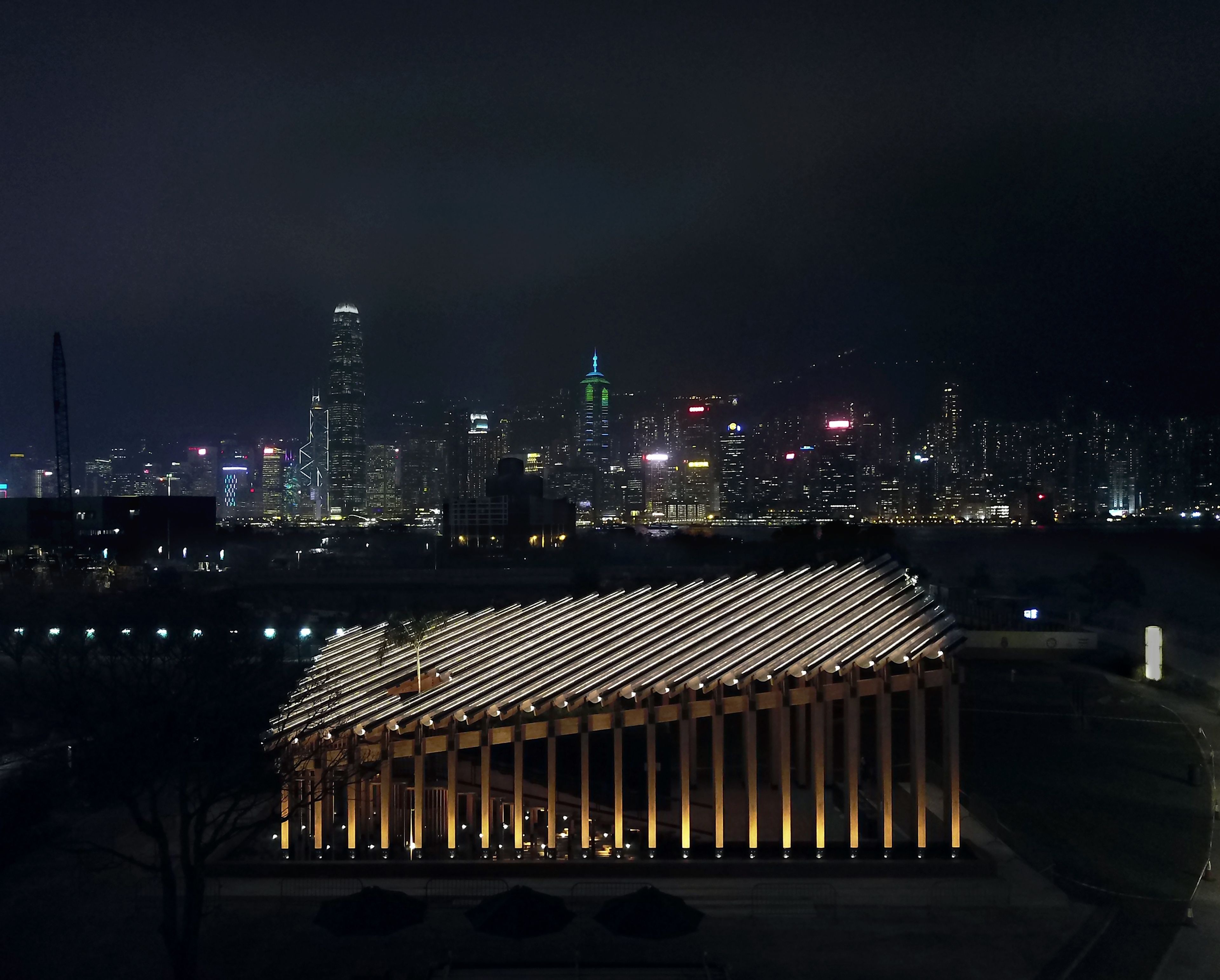
How Did We Build Hong Kong’s Only Modern Timber Building?
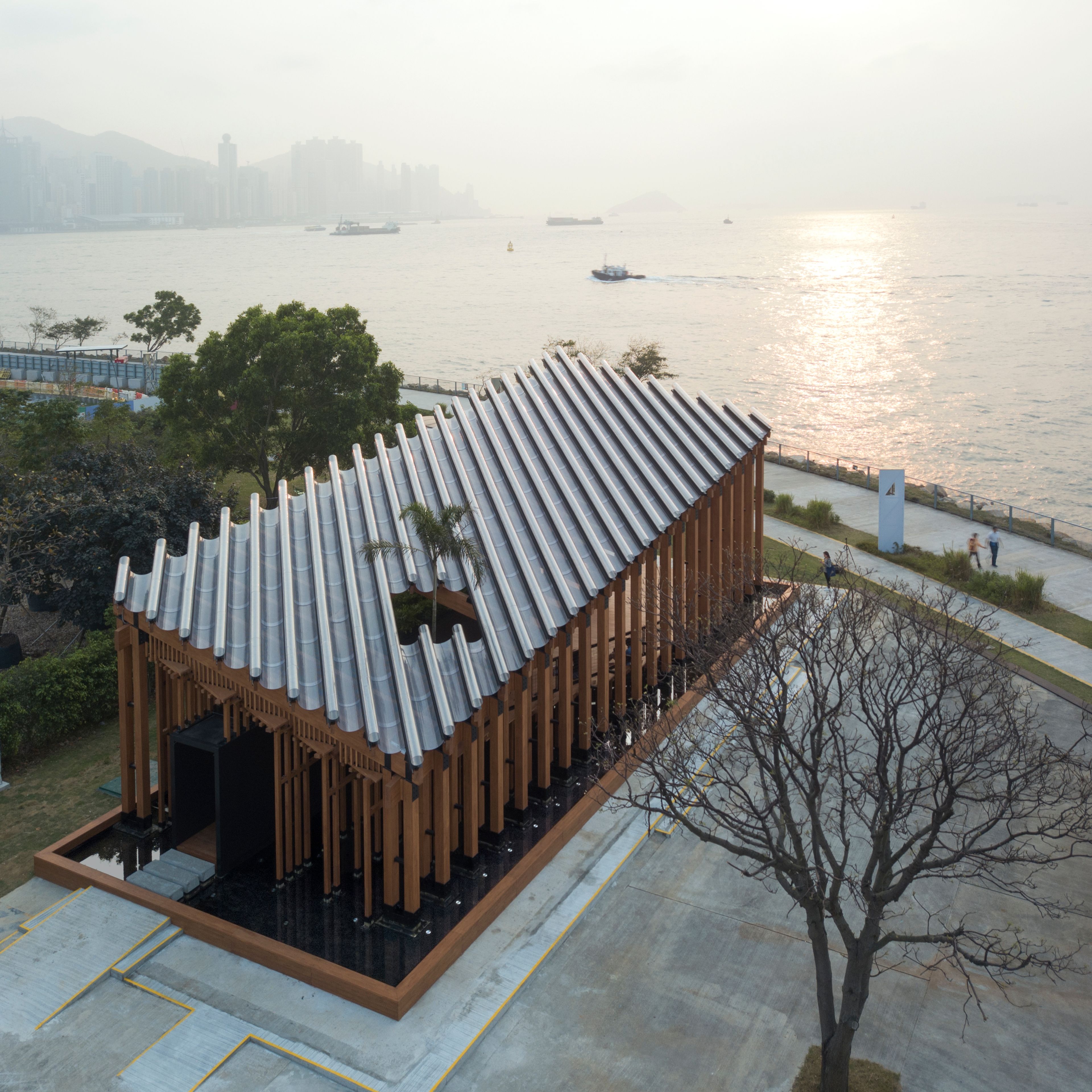
A Story by New Office Works — Hong Kong Design Architects Behind Growing Up Pavilion
In a city dominated by concrete and steel, timber has almost disappeared from Hong Kong’s built environment.
The Growing Up Pavilion marked not just the birth of a new architectural icon, but an urban experiment in rediscovering trust in wood.
From competition to approval to construction, this project by Hong Kong architecture firm New Office Works took six years to “grow” through the city’s regulatory gaps—creating a rare public open space in Hong Kong that breathes with life.
I. Inspiration: The Idea of “Growing”
In 2017, the West Kowloon Cultural District Authority launched an open competition for young architects, themed “Growing Up.”
At the time, our practice had just been founded. None of us imagined this short-term project would define the next several years of our journey—or that it would make us the only Hong Kong design architect to complete a modern timber structure.
We asked ourselves: In such a high-density, concrete city, what does it mean to grow?
Rather than designing an isolated pavilion, we envisioned a space that could breathe.
Our concept was simple yet ambitious: a building that grows like a tree.
Timber columns rise from the ground as the roof unfolds like a canopy, creating a shaded clearing within the city.
The pavilion was designed not just to show architecture, but to grow urban life—connecting ground and sky, people and sea, past and future.
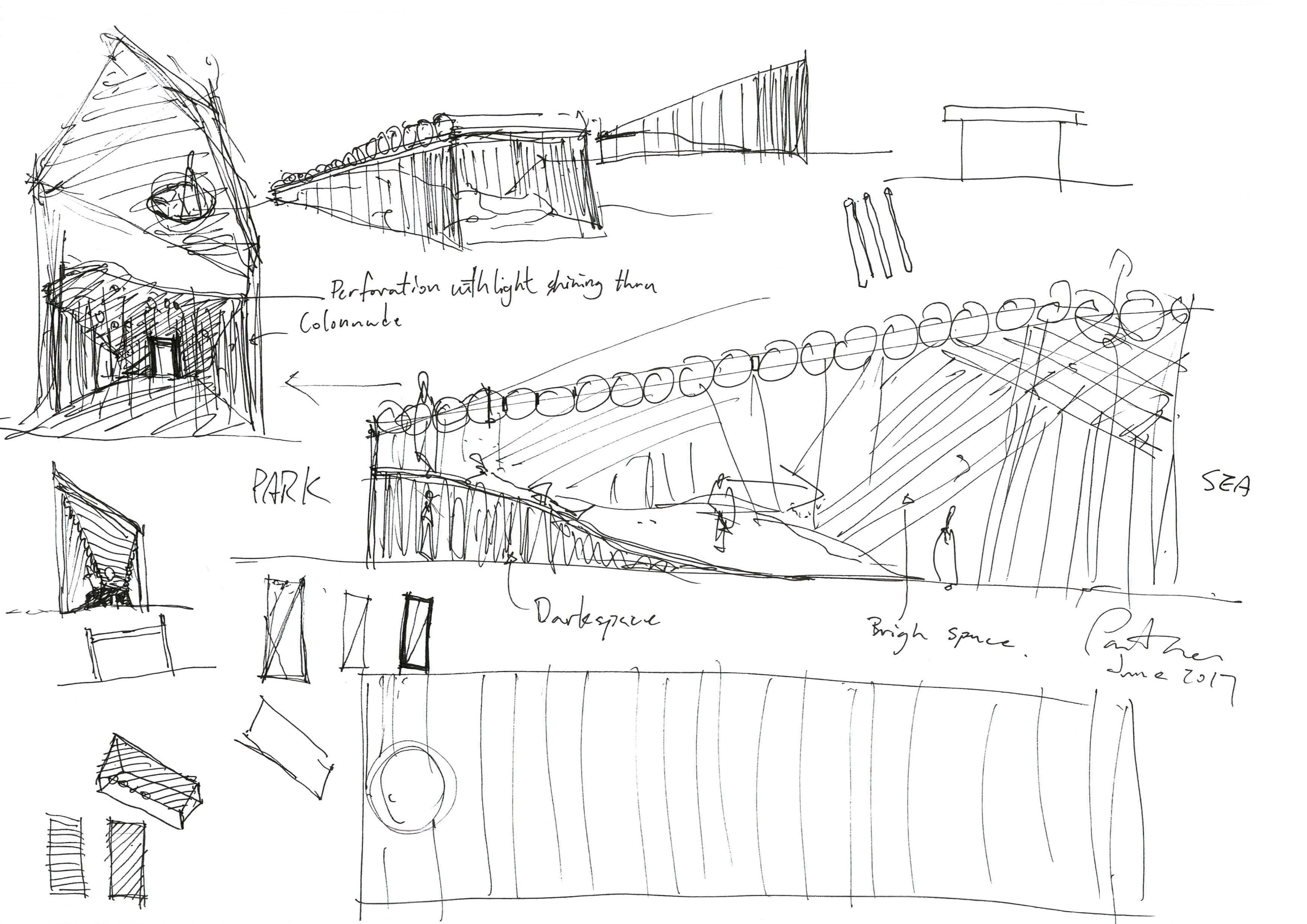
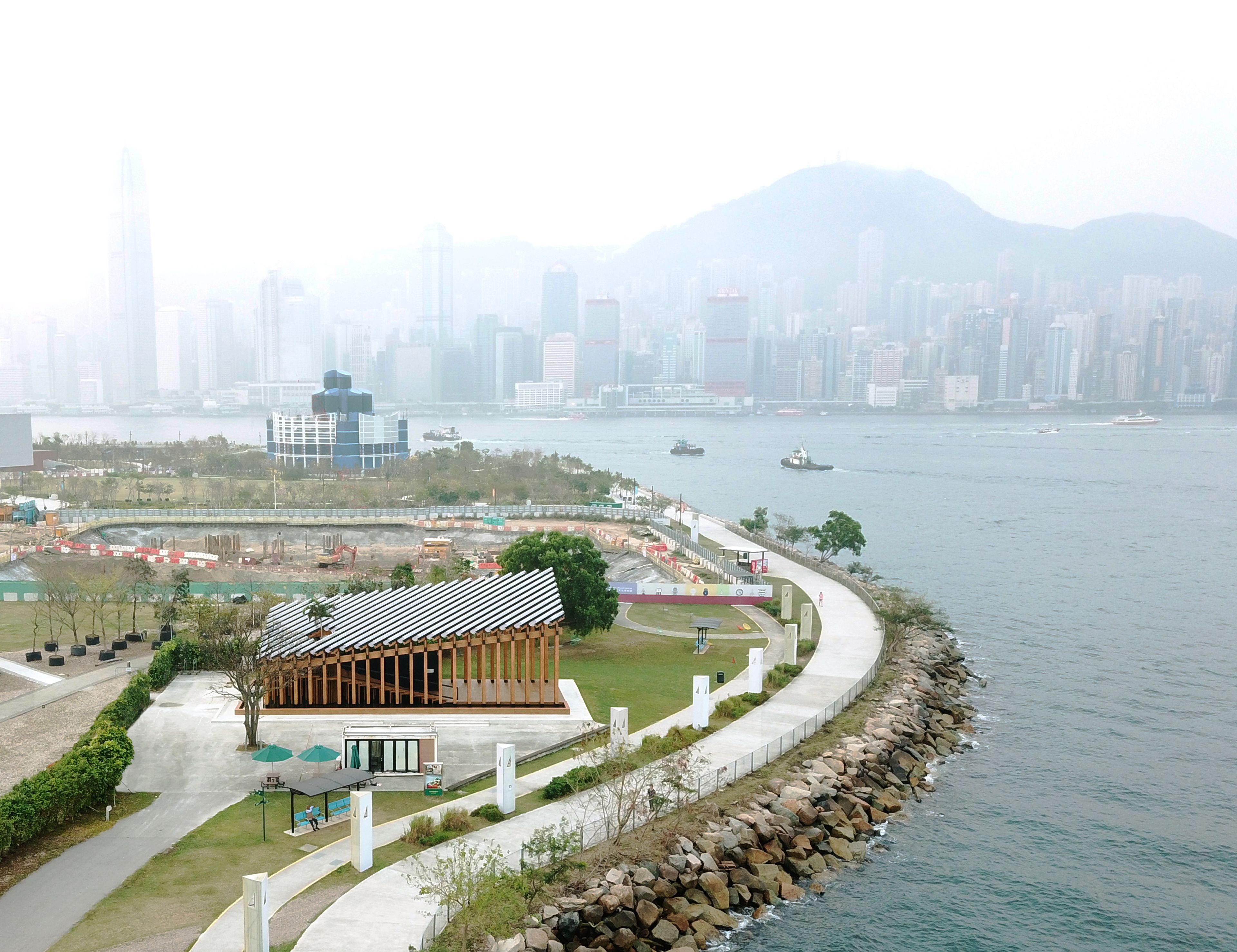
II. Design Origins: Growing from the Memory of Hong Kong
Hong Kong’s architecture is shaped by its unique topography, density, and subtropical climate.
As a Hong Kong architecture firm, we believe good design grows from local context—not from a blank slate.
As co-founder Evelyn Ting explains,
“This design was an exercise in observing the everyday—stairs, canopies, eaves, palm trees—and reimagining their meaning in architecture.”
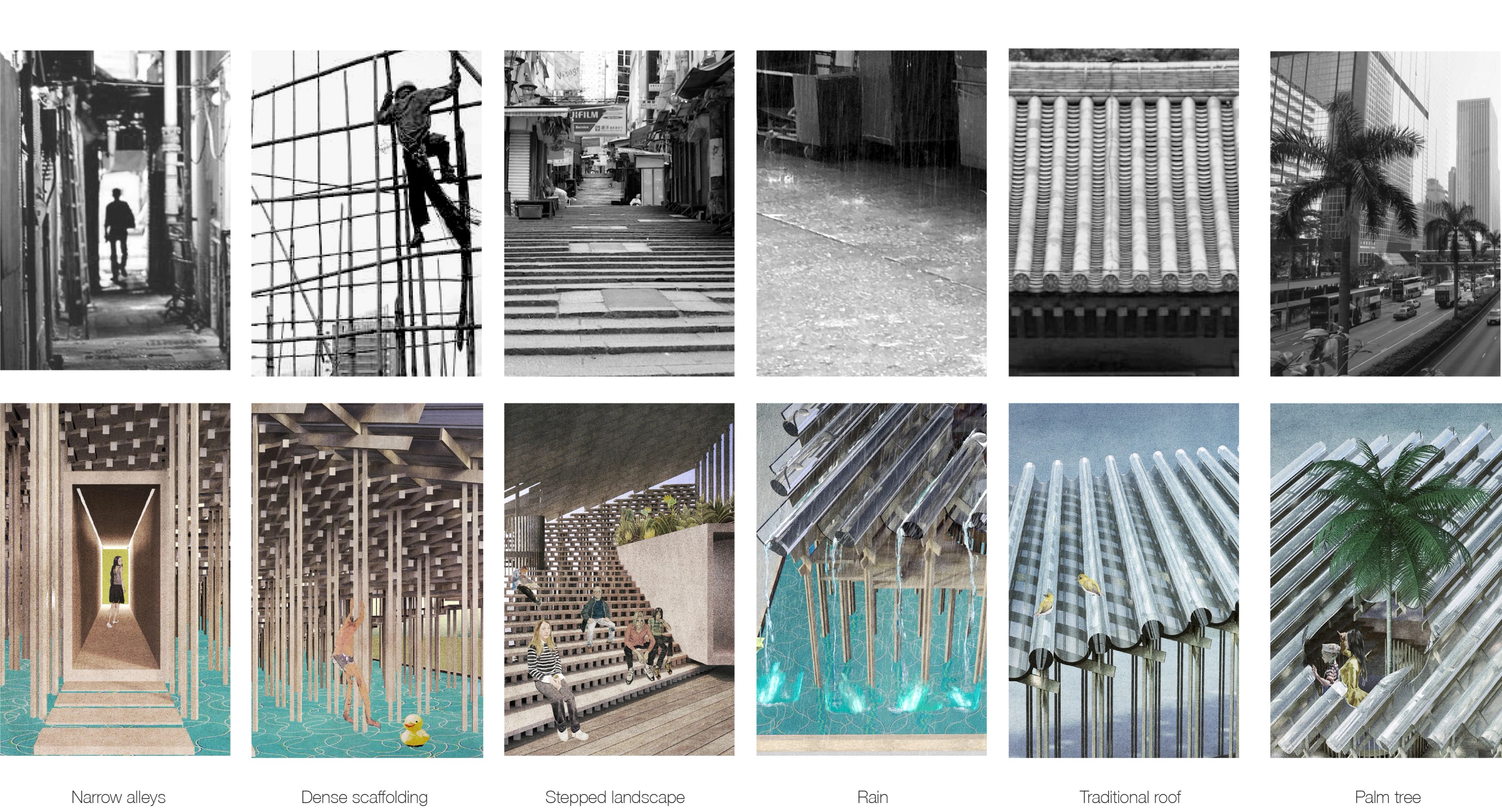
From Hong Kong’s familiar cityscape, we distilled six local elements and transformed them into design language:
alleyways, scaffolding, hills, rain, eaves, and palm trees.
Each was reinterpreted architecturally:
- The narrow rhythm of alleyways became timber columns.
- Scaffolding inspired the structural cadence.
- Hills shaped the stepped landscape.
- Rain informed the roof geometry.
- Eaves evolved into a light shelter.
Palm trees guided the structure’s skeleton and poise.
Together, they formed a pavilion that feels both contemporary and rooted in Hong Kong’s everyday life—a building that grew from the city itself.
You can explore more of our contextual designs on our Projects page ↗.

III. From Vision to Reality: Working Through the System
When we won first prize in the competition, congratulations poured in. But at our first project meeting, one question silenced the room:
“Are you sure you want to use timber? It’s almost impossible to get that approved in Hong Kong.”
The concern was valid. Under Hong Kong’s Buildings Ordinance and Code of Practice for the Structural Use of Timber (2011), timber can only be used for non-load-bearing walls or temporary structures. Any load-bearing timber building above 6 metres requires exceptional approval and case-by-case assessment.
Even more challenging, Hong Kong lacks a local standard for engineered wood. Unlike the UK’s CLT (Cross-Laminated Timber) regulations, we still rely on codes from 1994.
To use new timber technologies, we had to commission independent fire, wind, and seismic tests. Each costing over HK$1 million and taking a year or more.
For a new Hong Kong architecture firm, it was an enormous challenge.
IV. Choosing Timber, Against the Odds
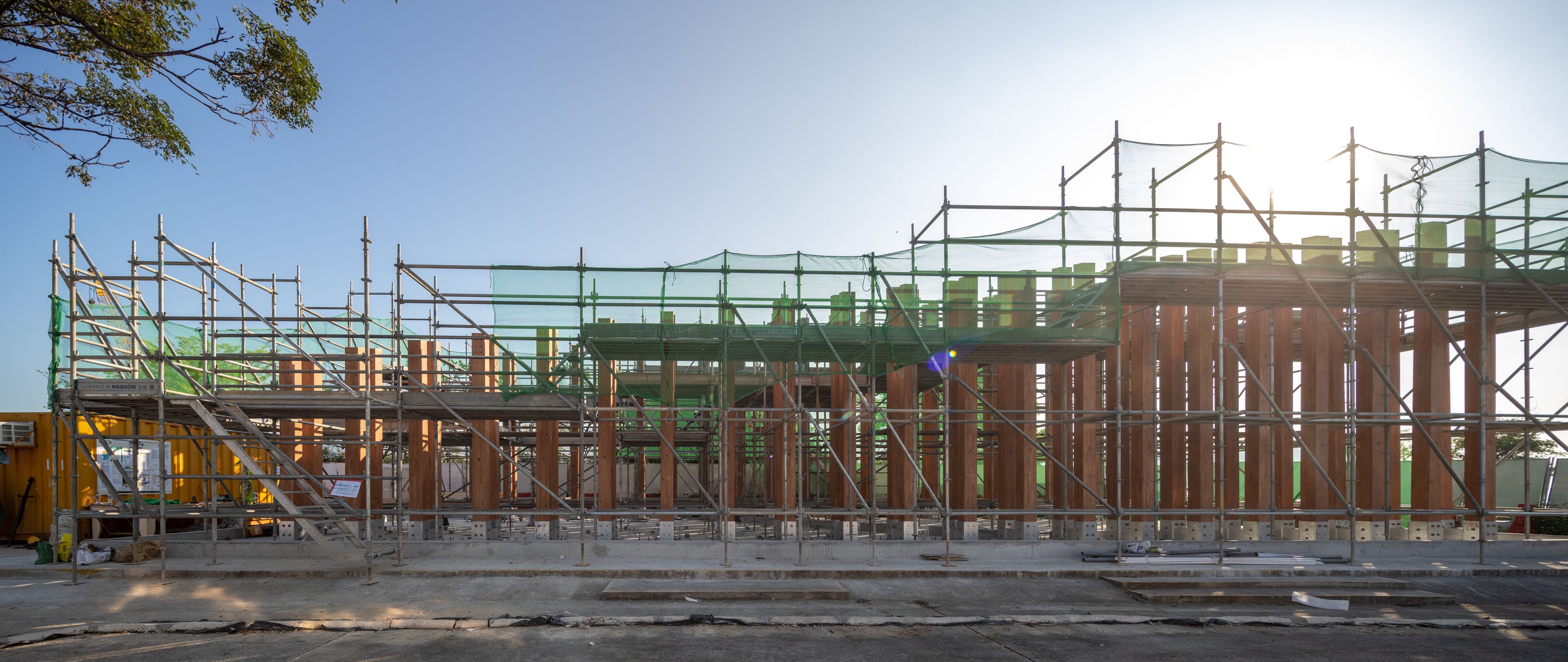
At one stage, the client suggested a fallback: “If timber doesn’t pass approval, we can switch to steel.” But we didn’t compromise. If the pavilion were built in steel, it would no longer be growing. We stood firm on timber and used UK standards as our benchmark.
Every joint, column, and beam underwent rigorous revalidation—testing wind resistance, fire performance, and corrosion resistance. Each document was reviewed line by line by the Buildings Department. Late nights were spent refining millimetre-level details.
When typhoon load calculations forced the column diameter up to 300 mm—making the design feel heavy—we optimized again: 275 mm for the tallest, 250 mm for mid-height, and 225 mm for the shortest columns. The result achieved both safety and lightness.
V. Fire Safety: Overcoming Historical Fear
Hong Kong’s collective memory of the 1953 Shek Kip Mei fire has long associated timber with risk. During fire-safety approval, our drawings came back covered in red marks.
We applied a dual protection strategy:
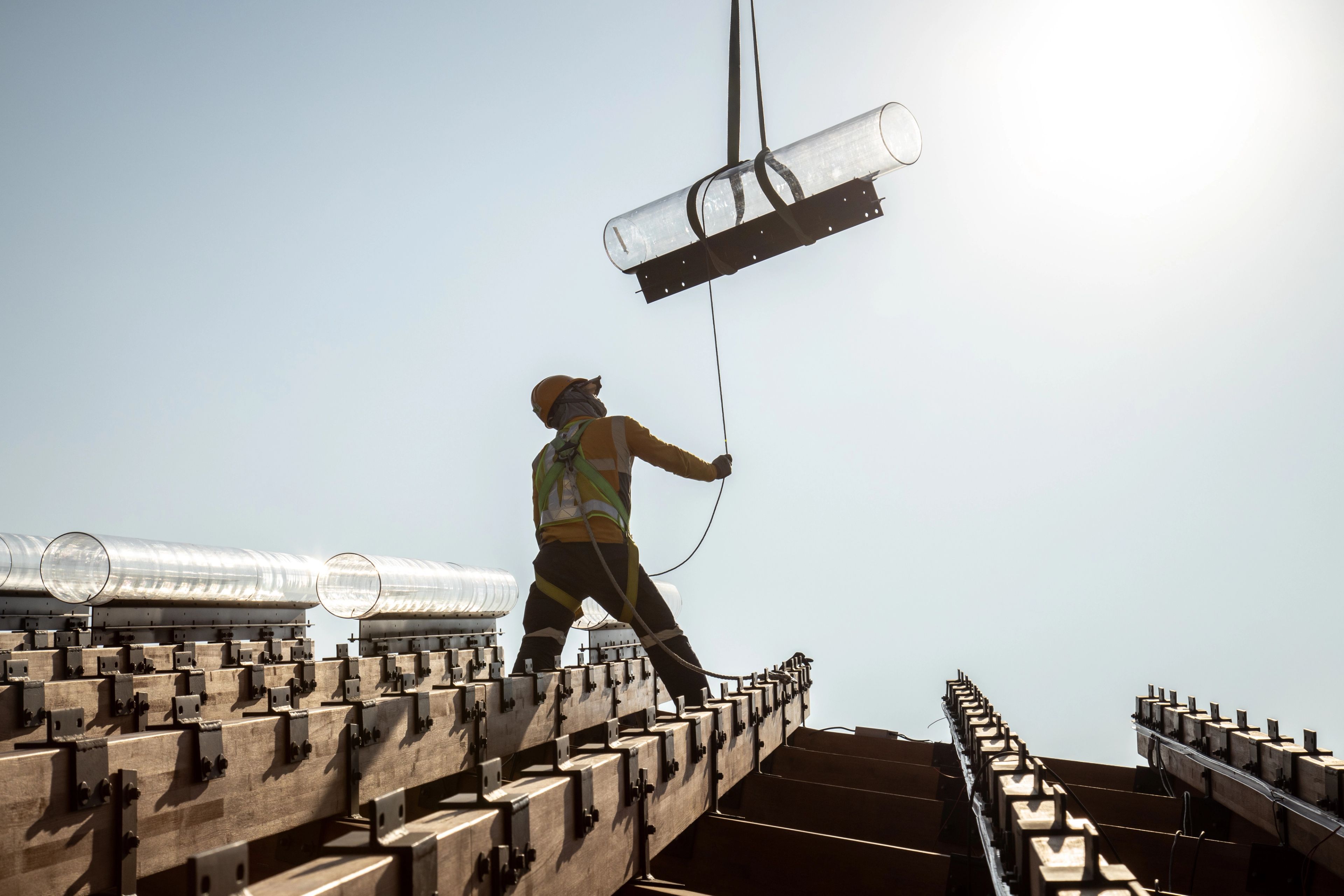
Natural protection — The columns’ thickness allows them to char on the surface, forming a layer that shields the core.
Fire coating — A specialized fire-retardant layer, fully tested and approved by the Buildings Department.
When approval was finally granted, we realized it wasn’t just a project milestone—it was a symbolic revival of timber in modern Hong Kong architecture.

VI. A Breathing Space: Timber and the City’s Rhythm
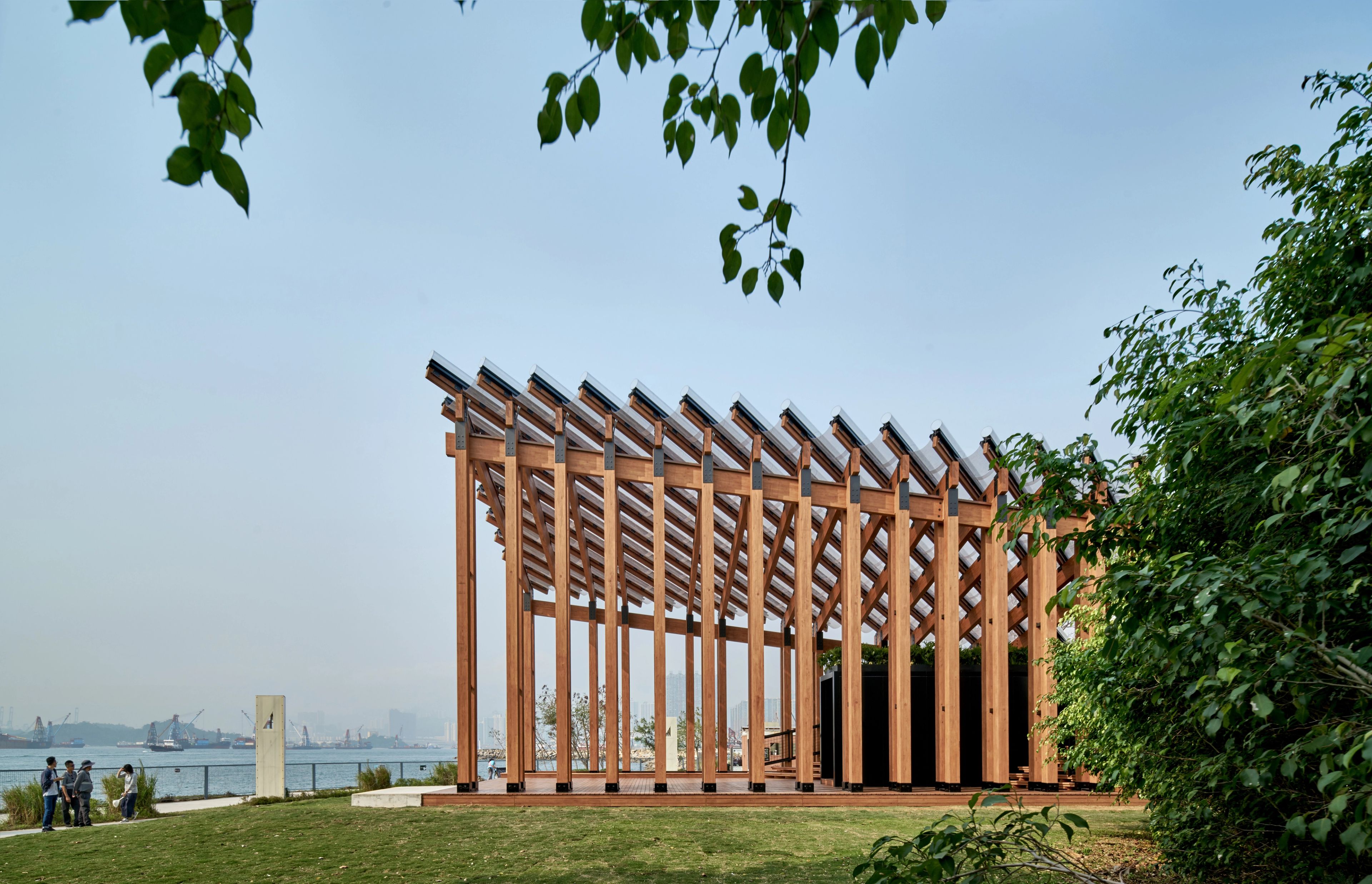
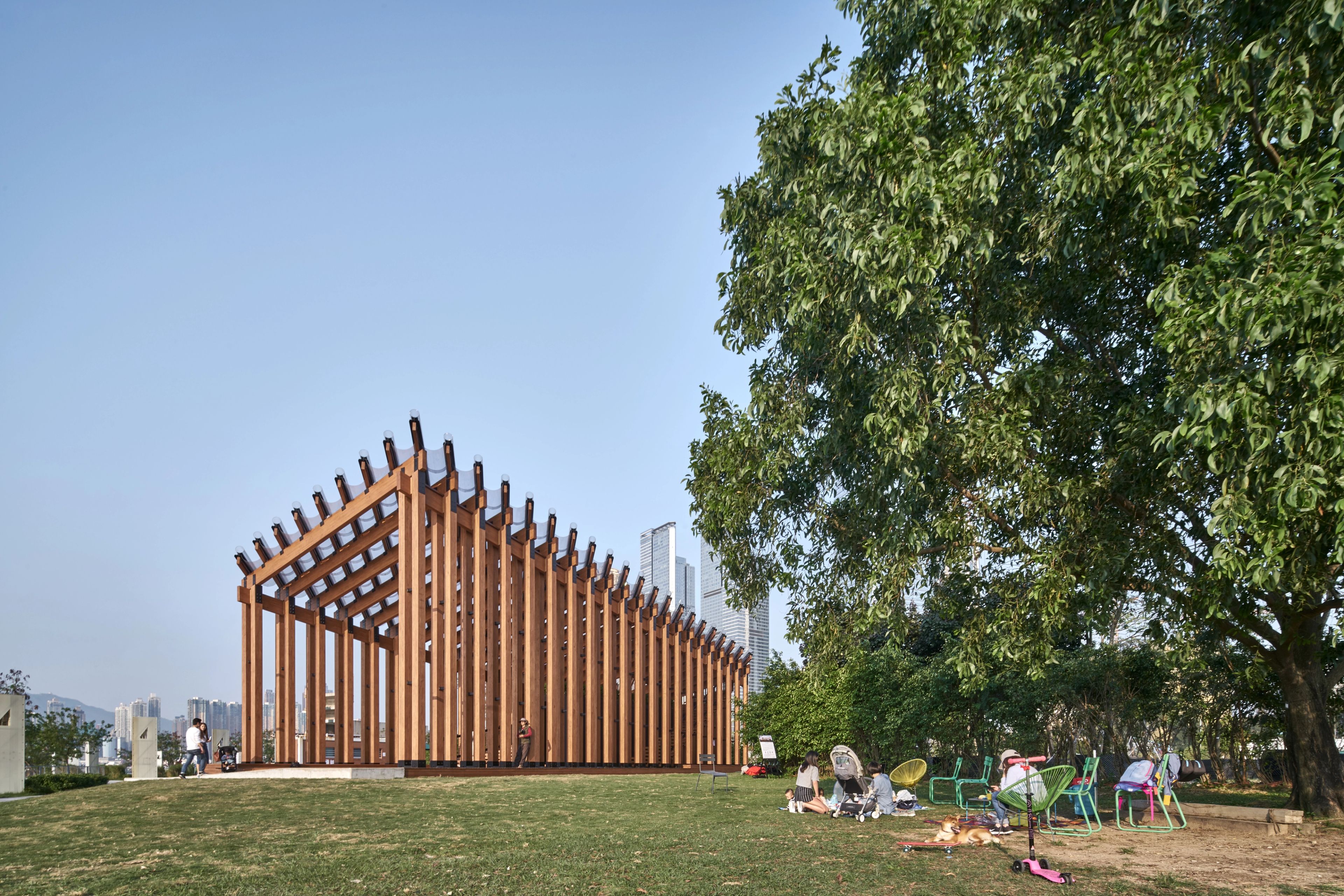
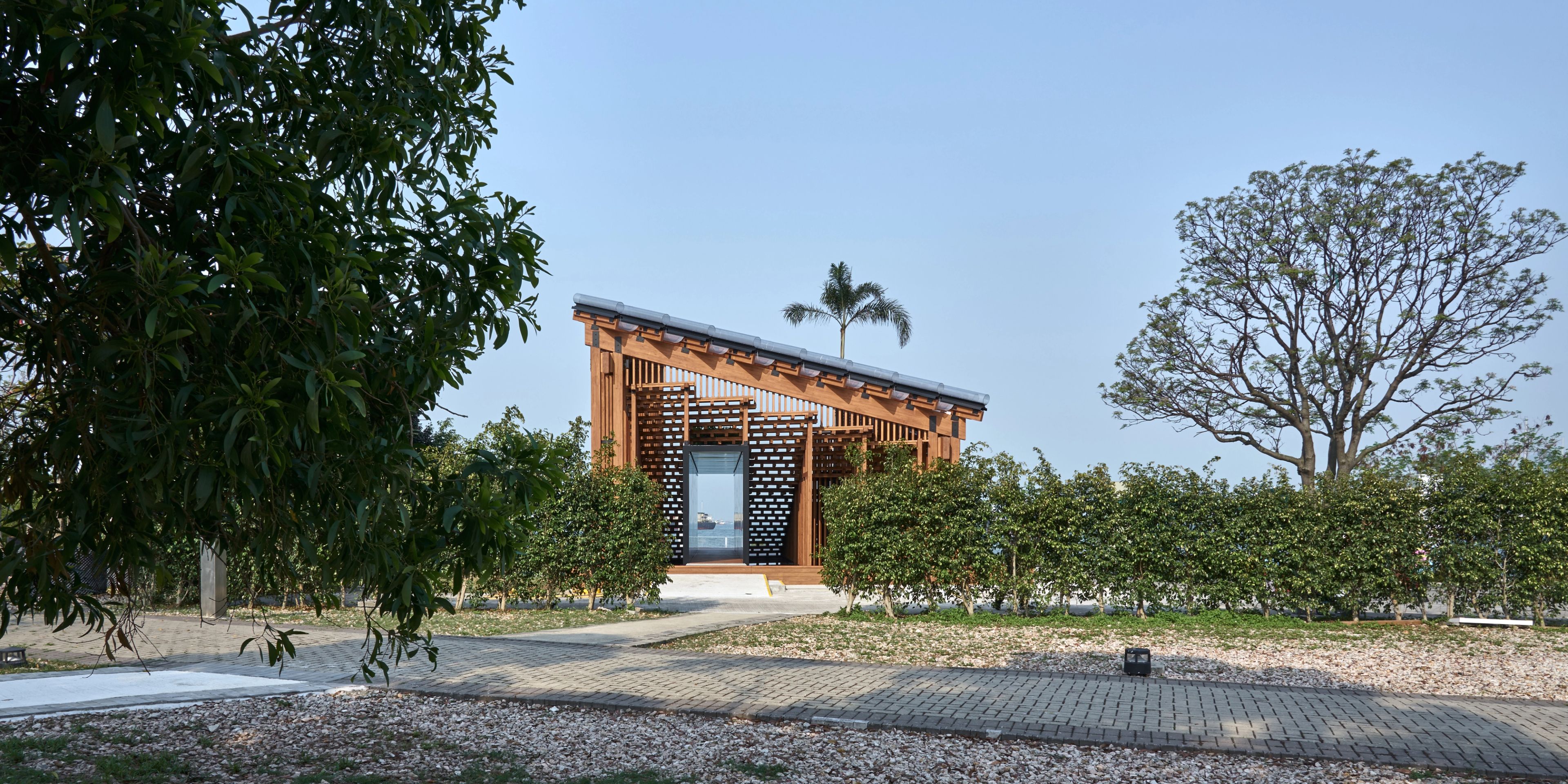
When the first column stood upright, the pavilion began to breathe. Under a gently sloping roof, dozens of timber columns rise from the ground, expanding from human scale to the scale of the harbour.
The stepped landscape serves as both stage and lookout, echoing Hong Kong’s hills and the city’s cultural layering.
Every angle offers a new perspective:
- The north and south sides feel open and weightless, merging with surrounding trees.
- From the east, dense columns create a rhythmic, scaffolding-like façade.
- From the harbour, the roofline stretches outward—forming a rare public open space in Hong Kong that feels both intimate and expansive.
This is not a monument or sculpture, but a living, walkable space that invites interaction and reflection.
VII. March 1, 2019: Opening to the Public
When the Growing Up Pavilion opened, it was intended to stand for only six months. Yet it quickly became one of the most beloved public open spaces in Hong Kong’s West Kowloon Cultural District.
Children played on its wooden steps, visitors leaned on columns to watch the sea, and passersby sheltered beneath its eaves during summer rain. Renewed every six months, the timber structure remains solid and unchanged after six years—weathering salt and wind with quiet resilience.
VIII. Planting the First Tree in a “Timber-Banned City”
To date, Hong Kong has no high-rise timber buildings. Only a few low-rise or heritage projects—like the beams of Tin Hau Temple, Chi Lin Nunnery, and Maggie’s Centre—feature timber elements. None, however, are modern load-bearing timber structures.
The Growing Up Pavilion stands among the very few contemporary public timber buildings in the city not built under protection, but grown through persistence, negotiation, and belief.
IX. Epilogue: Growth Continues
From 2019 to 2025, the pavilion has quietly stood by the harbour, its timber roof glowing in the evening light.
When people ask,
“How did you dare to build with wood in Hong Kong?”
we always reply with a smile:
“It’s not about daring—it’s about helping the city learn to trust wood again.”
Growing Up is more than architecture. It is a seed planted in Hong Kong’s climate, memory, and regulation—proving that even in the most concrete of cities, growth is still possible.
Discover more works by New Office Works ↗ and how we continue to shape meaningful public open spaces in Hong Kong.