The Story Behind Kai Tak’s Clubhouse in the Sky
A Second Ground Above the Clouds: The Story Behind Kai Tak’s Floating Clubhouse
In Kai Tak, we have cultivated an island of greenery high above the city.
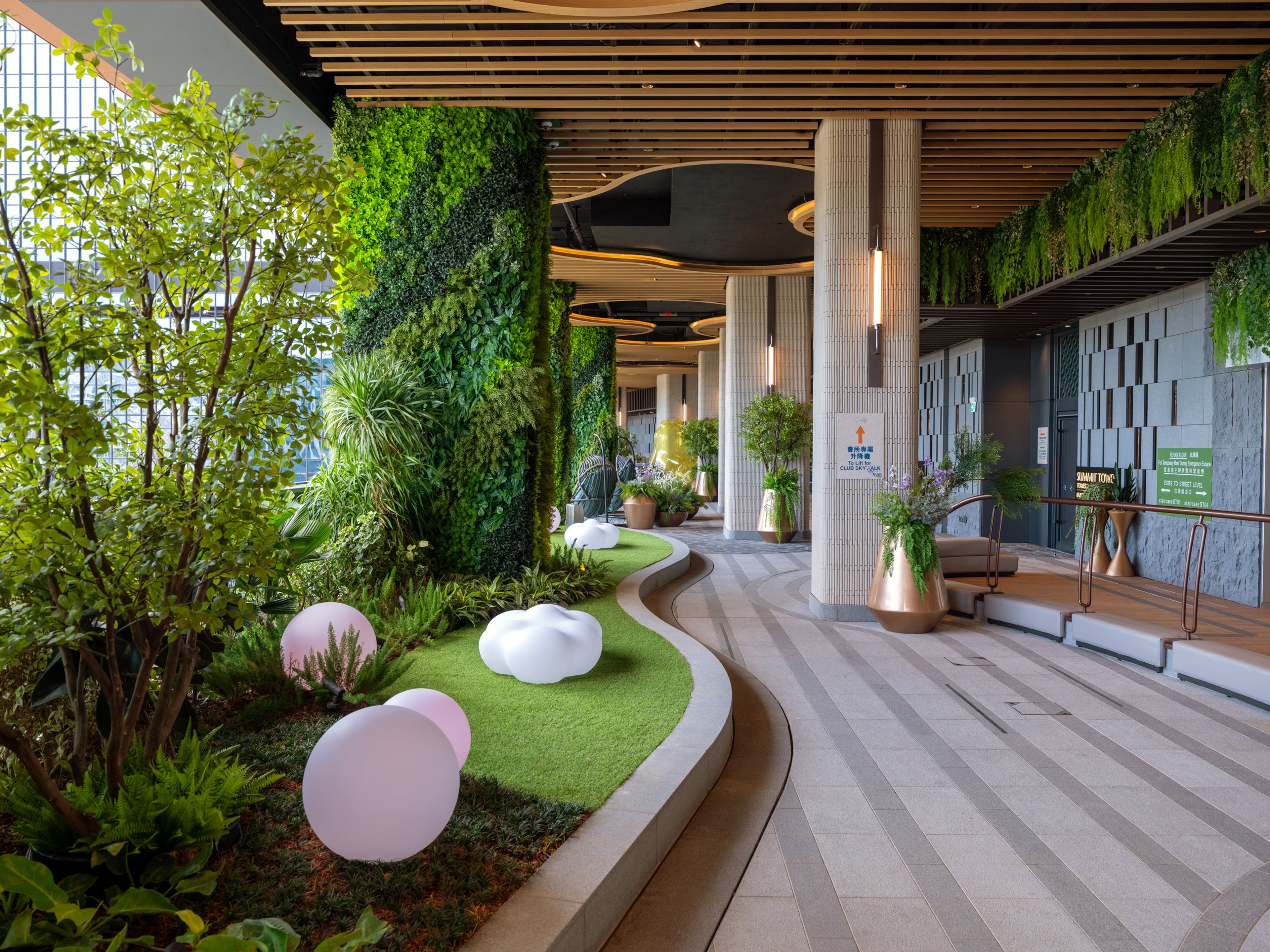
Situated between the 30th and 31st floors of The Cullinan, this clubhouse and garden float among residential towers, with Lion Rock to the north and a sweeping view of Victoria Harbour to the south. The design of the Sky garden offers the residents a unique experience with nature high up in the sky.
I. Flowing Nature Between High-Rise Towers
Once an airport, Kai Tak has transformed into a densely populated residential area. Our goal is to carve out a space where daily activities can take place in a natural environment.
The garden, located at the heart of the residential complex, spans approximately 24,000 square feet across two levels. Our intent is not only to fill the space with greenery, but also inject various activities to activate the space.
The design concept is guided by three keywords: Organic, Fluid and Archipelago.
We envisioned a space that flows fluidly. The paving is designed with a winding texture, with different stone surfaces intertwined into curves forming “islands” and “streams”. These include party areas for gatherings, playground for children, fitness zones, and quiet nooks for reflection.
II. Living Across Two Levels: The Breath Between Motion and Stillness
The garden is divided into two levels — the 30th floor as the "Social Space," and the 31st floor as the "Serene Space."
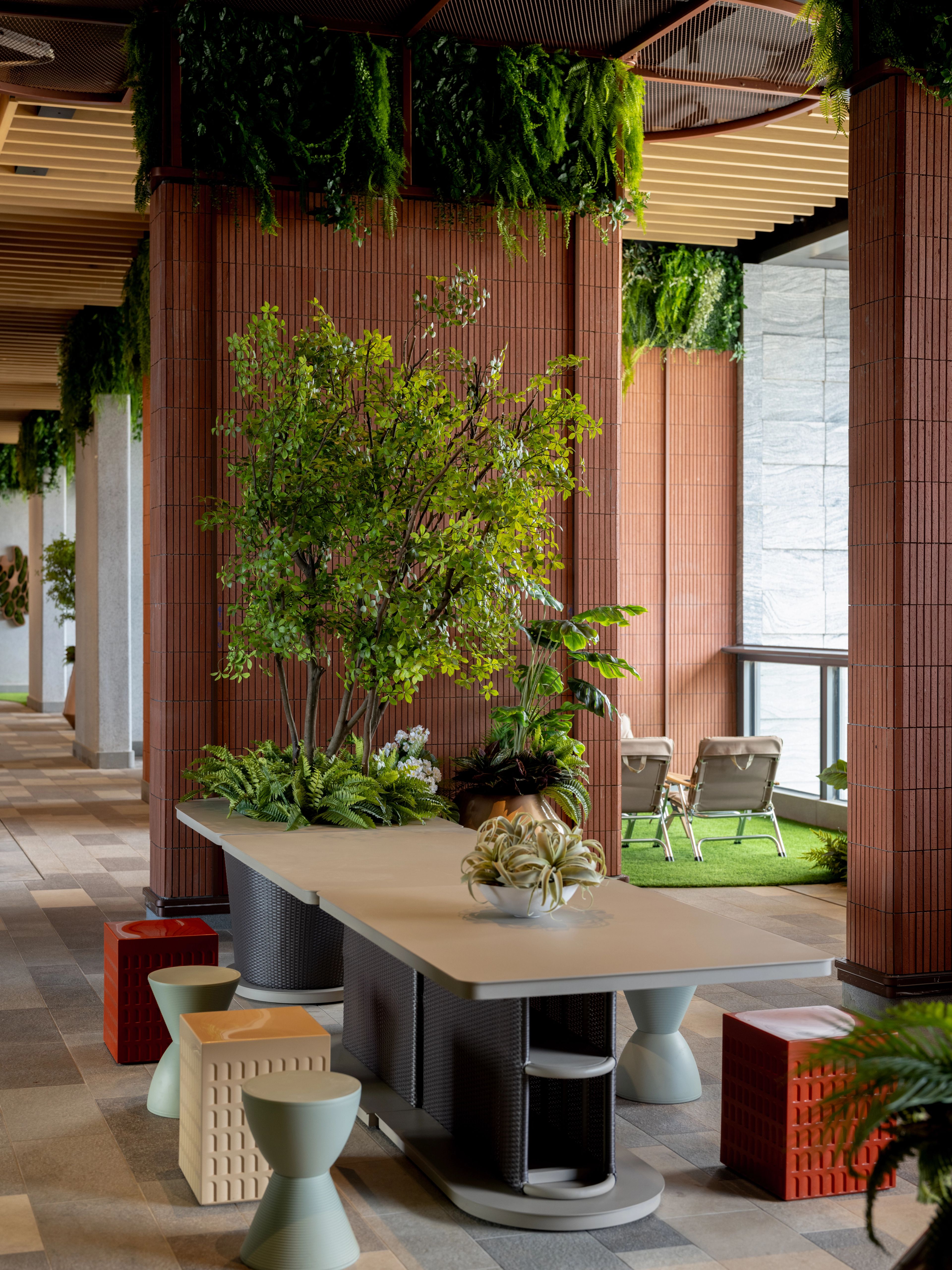
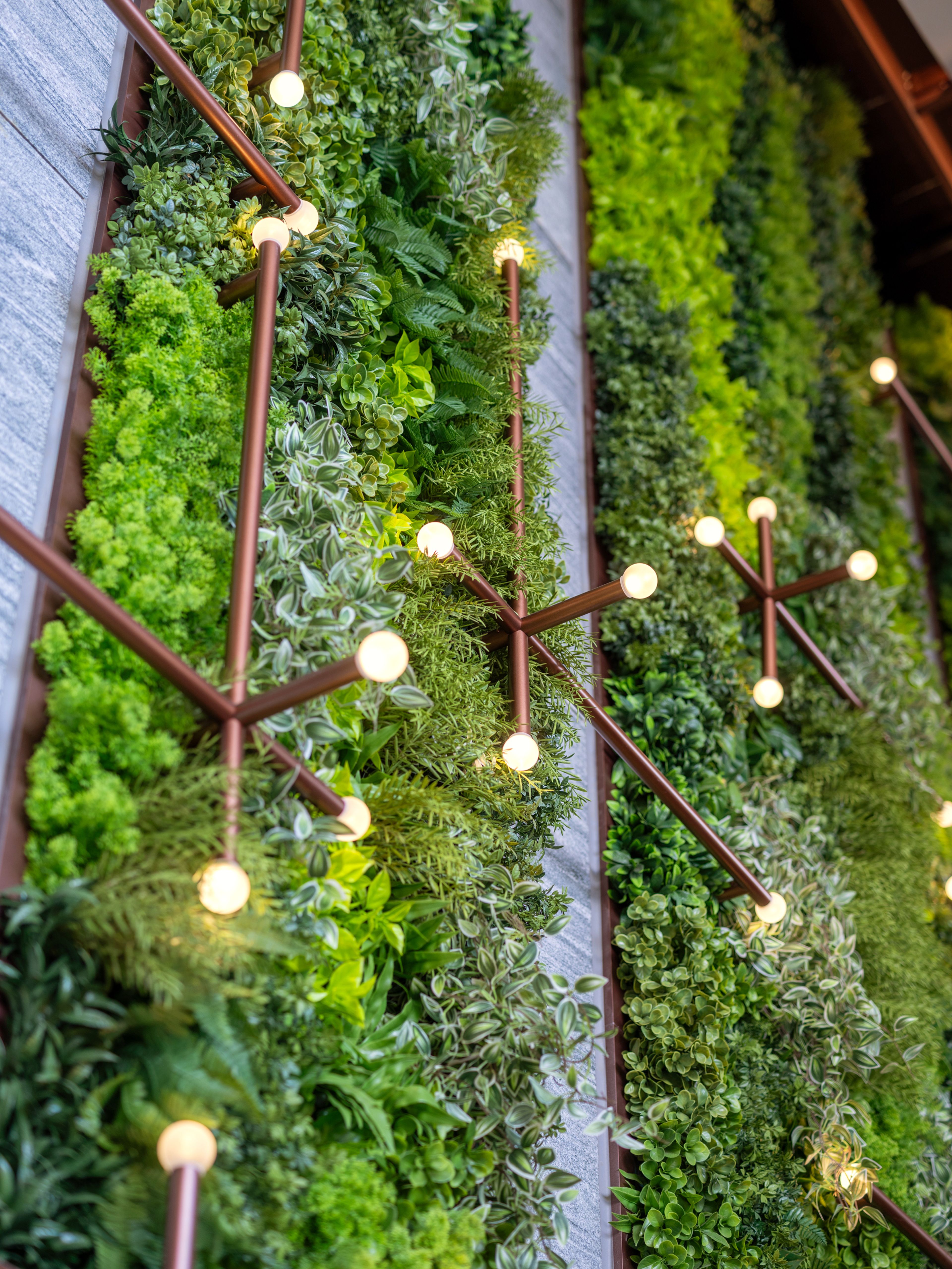
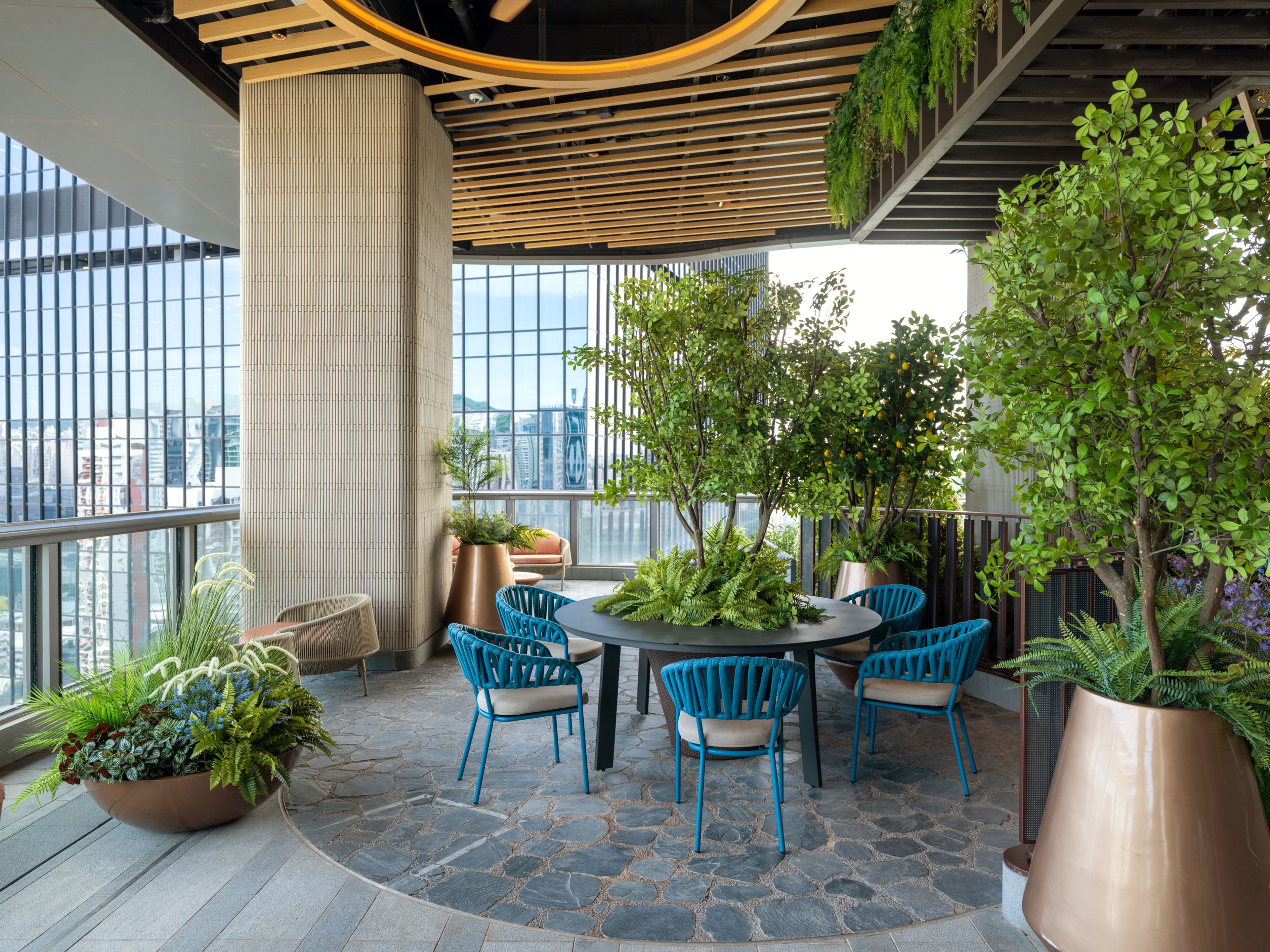
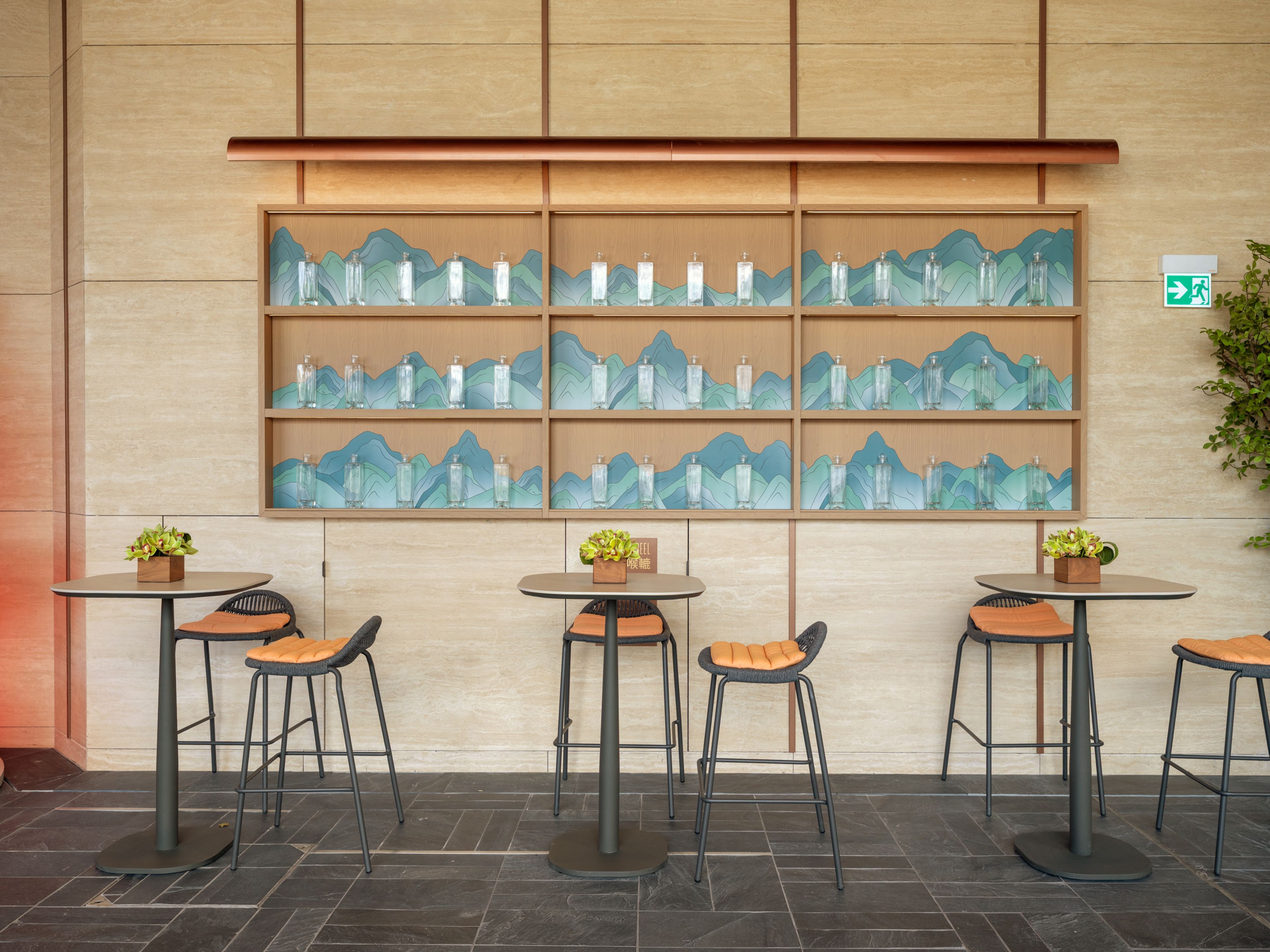
The layout of the 30th floor is more open, acting as a venue for social and community. Here, we have multifunctional courts, a leisure garden, party zones, and communal round tables. As night falls, soft light filters through the vegetation, weaving a tapestry of light and shadow, reminiscent of walking through a calming park.

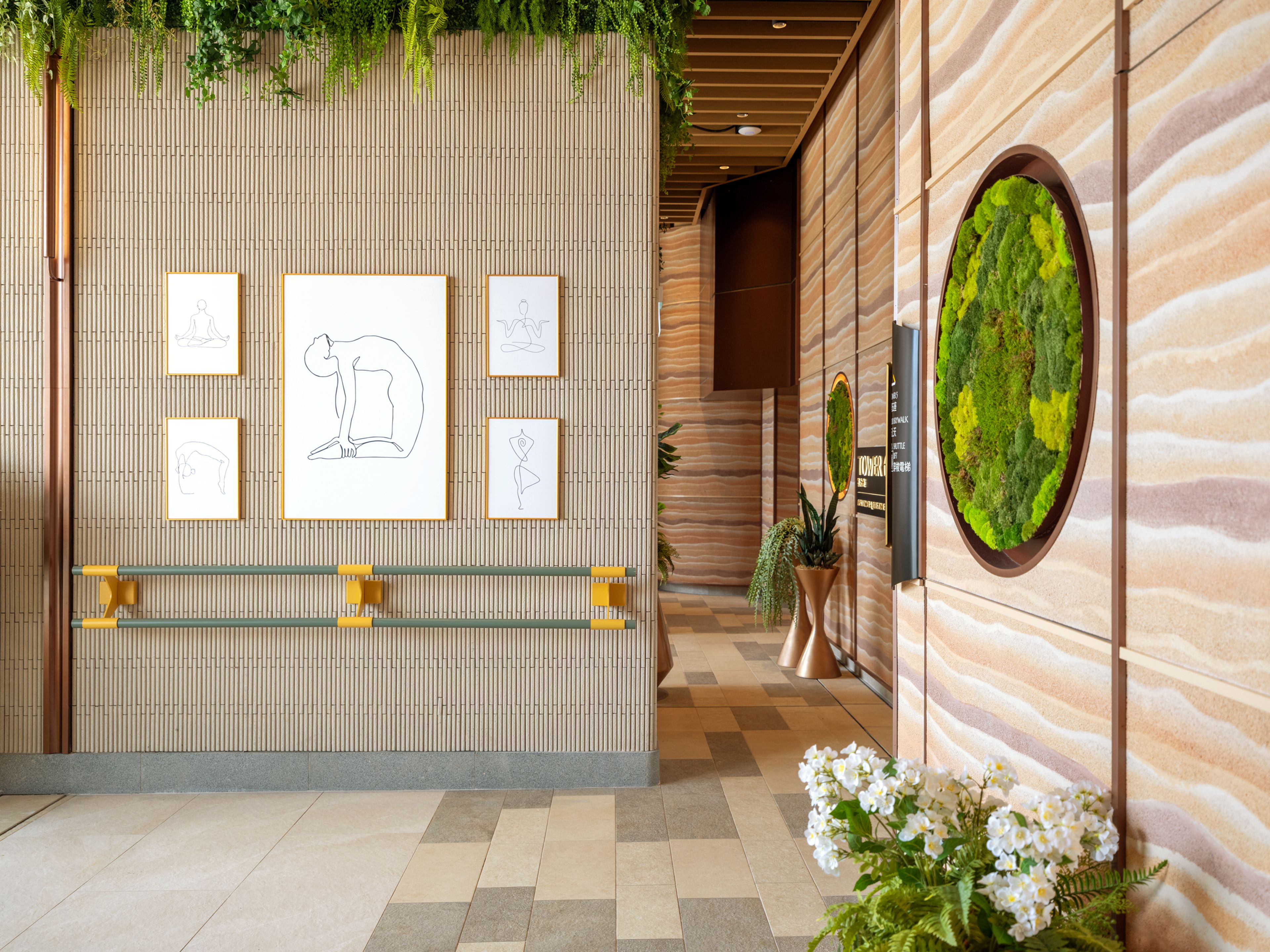
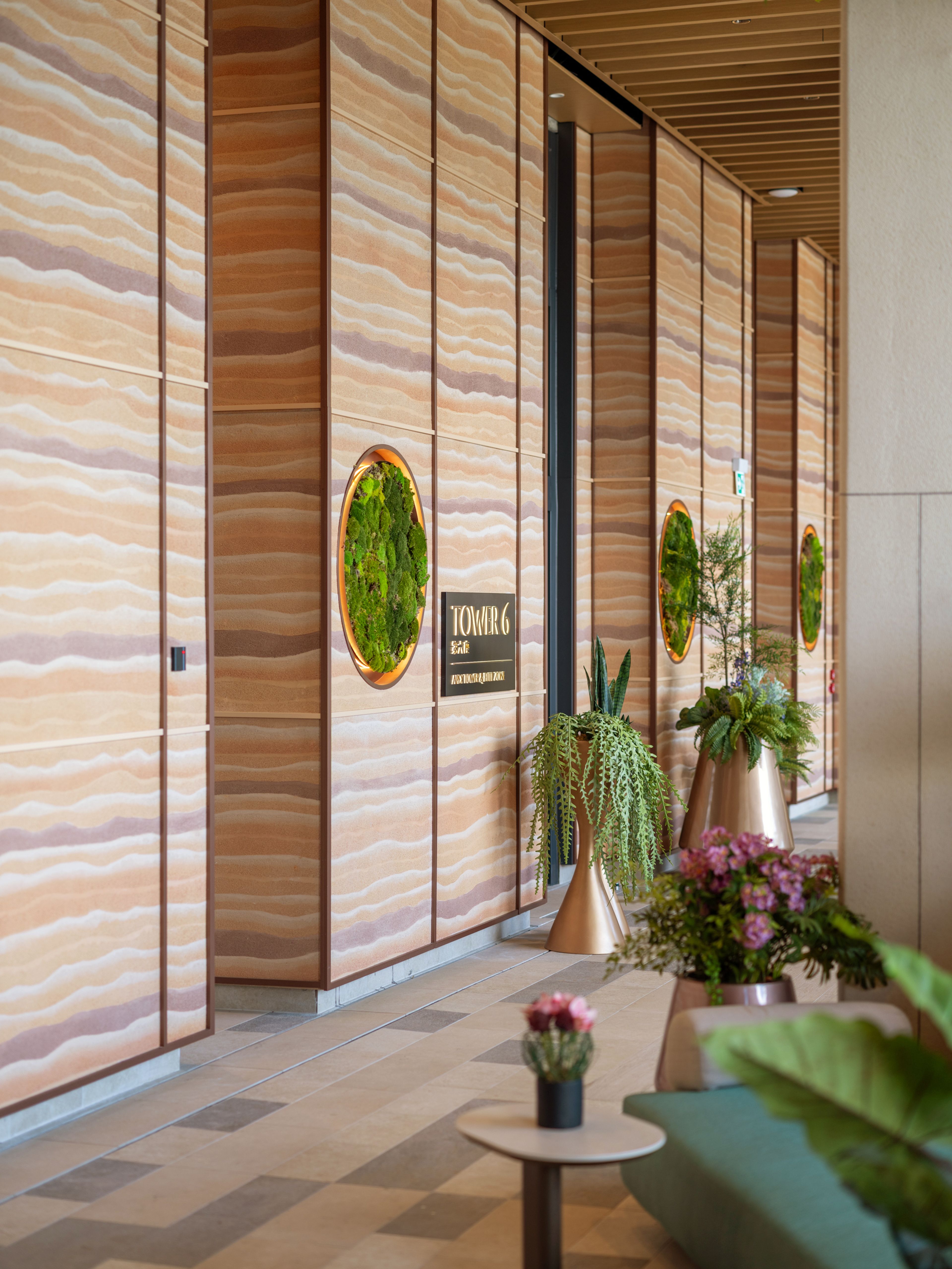
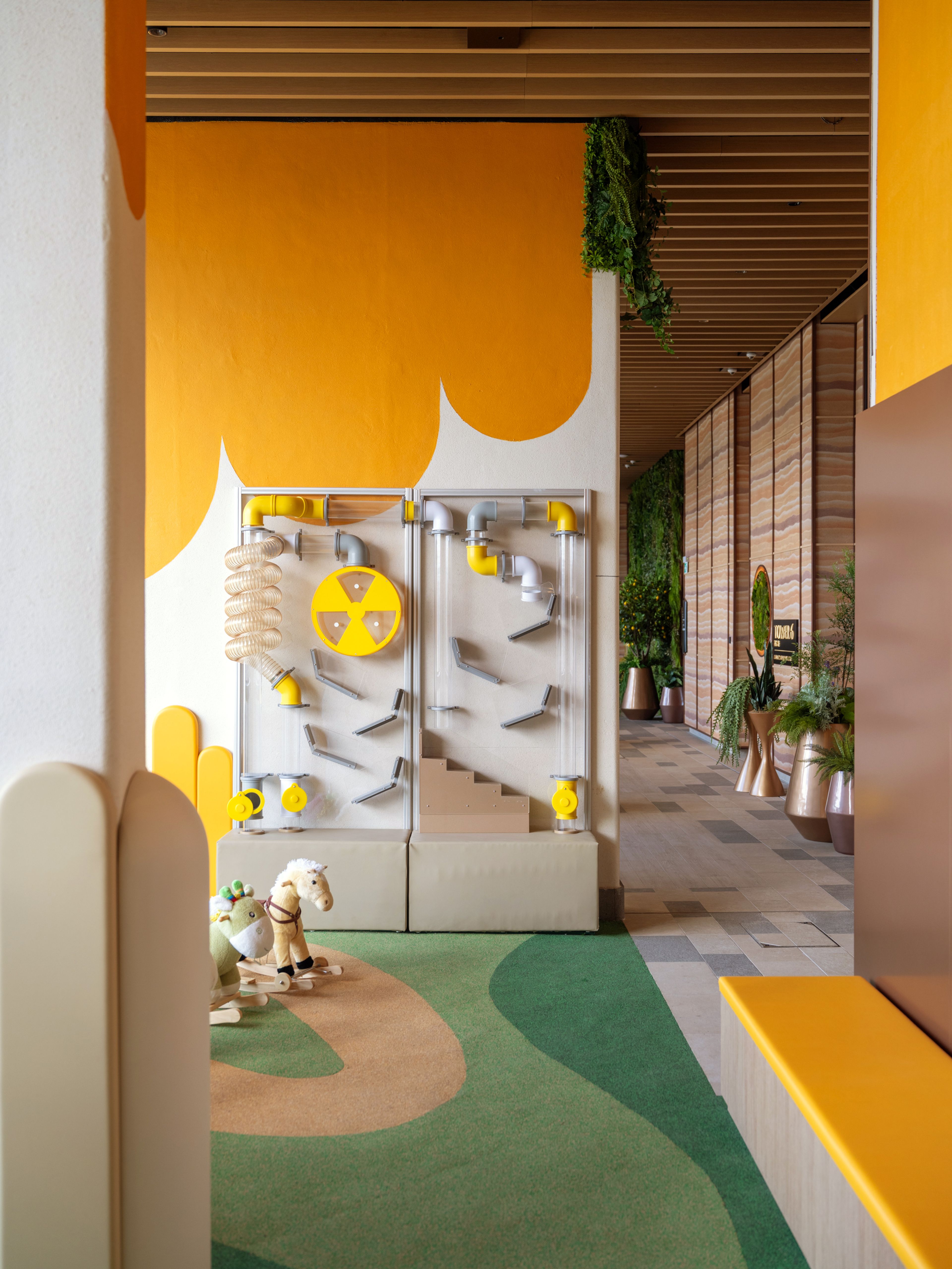
Conversely, the 31st floor adopts a different rhythm. Individual “room” are formed by the shear wall’s of apartment units. With wooden floors and rammed earth walls, the space invites a rustic warmth, while surrounding green walls and hanging decorations cultivate a tranquil atmosphere. This level features a tea room, reading area, yoga studio, and a playground for children. These floating islands are connected by a curved central staircase and the “Landing Lounge.”
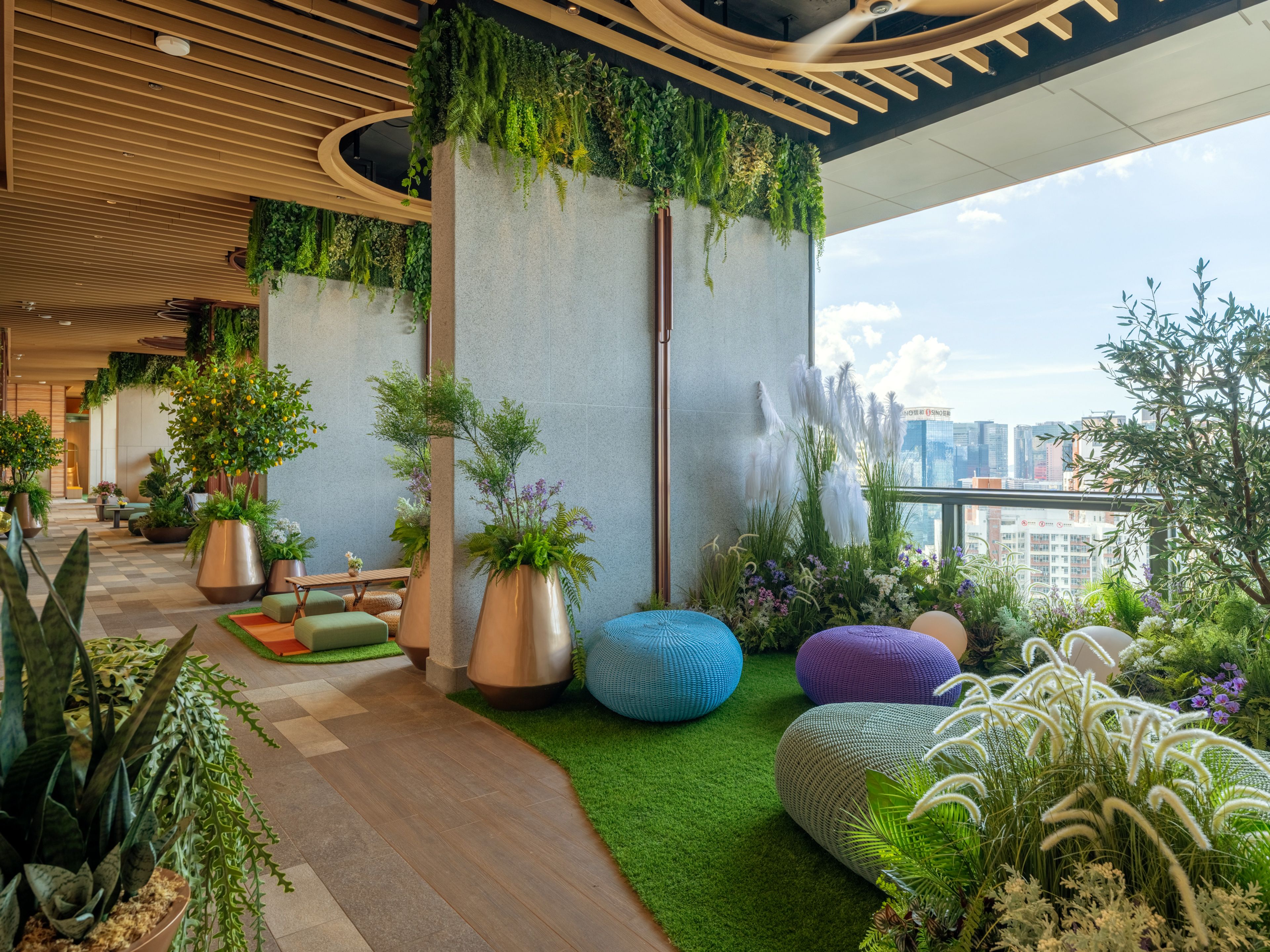
The transition from active to tranquil flows like two breaths. We hope to bring out various senses through these spatial transformations, improving the well-being of the residents.
III. Our Focus is on Bridging the Gap between Humans and Nature
We intentionally blurred the boundaries between “indoor” and “outdoor”: the resting area is surrounded by plants, and the open kitchen and long table are just a few steps away from the playground.
IV. The Design Aesthetic: A Sense of Lightness
Our goal for this project is to create an architecture that feels open and connected to nature. Through flowing pathways, natural materials, and swaying plants, we aim to introduce a sense of serenity to people’s daily lives.
Discover more works by New Office Works ↗ ↗ ↗ .